Whether Lenexa Requires a Permit to Remove a Tree
On a finished, occupied lot, no. Lenexa’s tree and landscape provisions live in the Unified Development Code at Section 4-1-D-2, and its applicability clause is a development clause - it reaches new development, expansions and modifications - so it creates no removal permit for a standing house and regulates no species selection on one.
Your Neighbor’s Tree, and Why Kansas and Missouri Diverge
Kansas follows the nuisance rule under Pierce v. Casady, so a tree doing substantial harm or creating imminent danger is a nuisance a neighbor can be compelled to abate. Missouri follows Hasapopoulos v. Murphy: no cause of action for the roots or branches of a healthy tree, and self-help at your own cost. The same tree, a few miles apart, is two different conversations.
Overhanging Branch Pruning, and Where Self-Help Stops
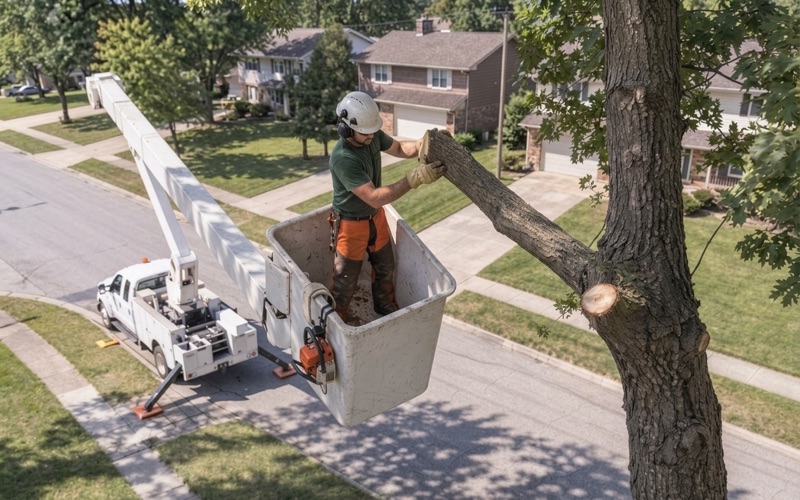
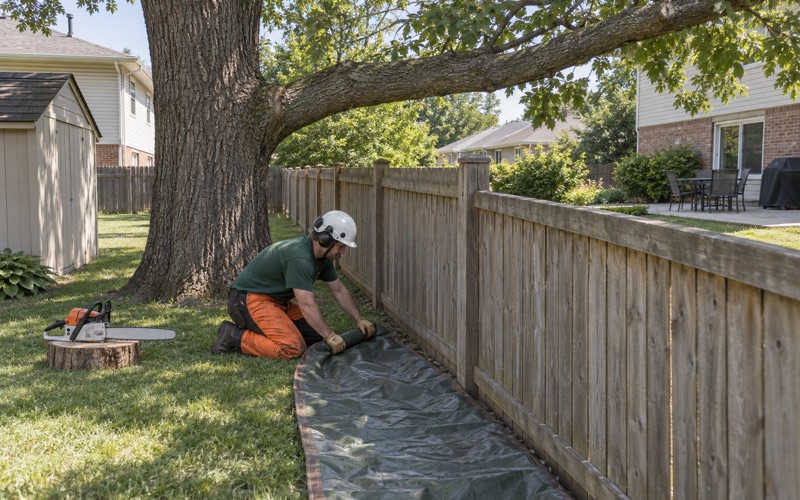
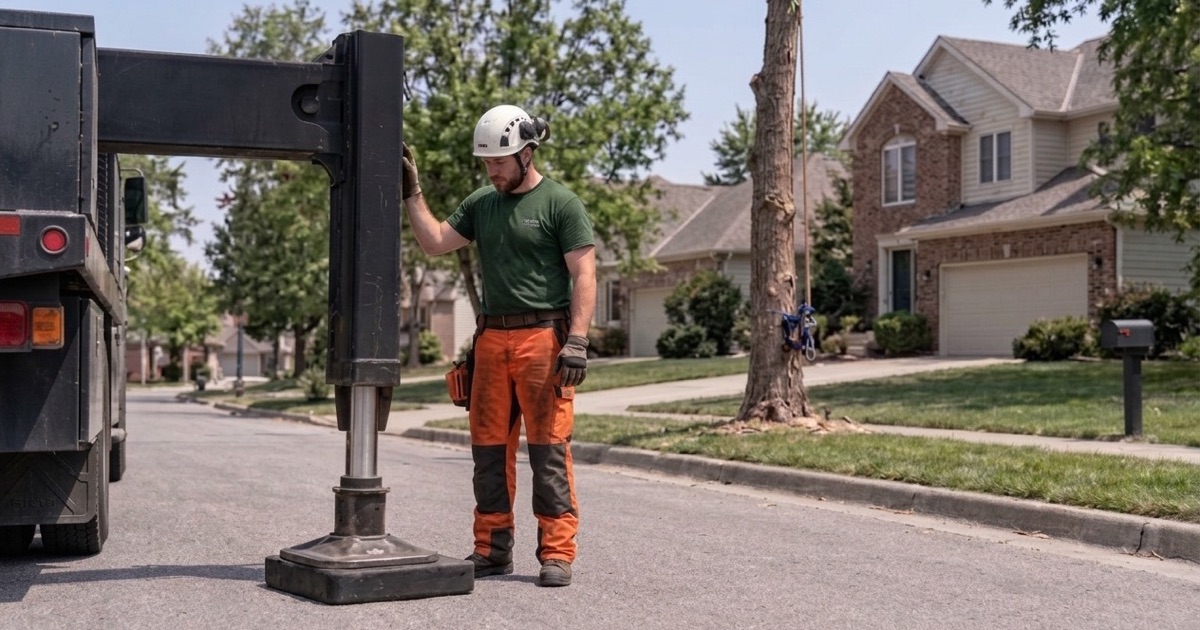
Under the Kansas rule you may cut back what overhangs your line, and you may not enter your neighbor’s land to do it. That single limit decides whether a job runs off a lift set on your own driveway or needs a signed agreement with the property next door, which is worth establishing before the crew arrives rather than across a fence with a saw running.
Who Owns the Tree Between the Sidewalk and the Street
Lenexa’s own answer is unusual for this county: a right-of-way tree on your property is yours as the homeowner, the right-of-way typically extends eleven to fifteen feet from the back of the curb, and you are not required to replace a street tree you remove. Overland Park by contrast prohibits right-of-way removal unless the city forester authorizes it.
Street Tree Clearance: Eight Feet Over Walk, Thirteen Over Street
The visible standard is clearance - eight feet of clear height over a sidewalk, thirteen over a street. Lenexa will trim a right-of-way tree itself where it causes a sight, sign or sidewalk obstruction, or where low-hanging or broken branches sit over the roadway or walkway, and crown raising is the operation that keeps a tree out of that category.
Dead and Hazardous Tree Removal Before It Becomes a Claim
The city states plainly that a dead or dying tree on your property is yours to remove before it becomes hazardous. Once a defect has been documented and left alone, the conversation with an insurer after it falls changes character entirely, so we put the hazard indicators in writing - dead wood, severe lean, cankers, conks, root failure, internal decay - and date them.
Oversized Removals on a Tight Inner-Ring Lot
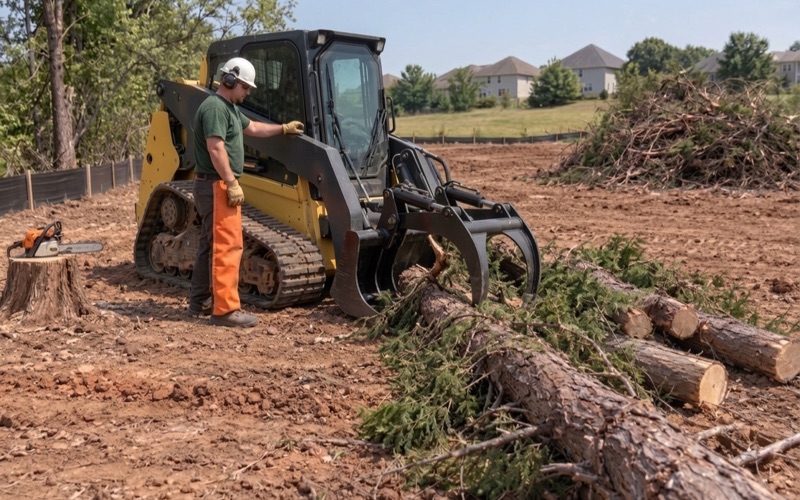
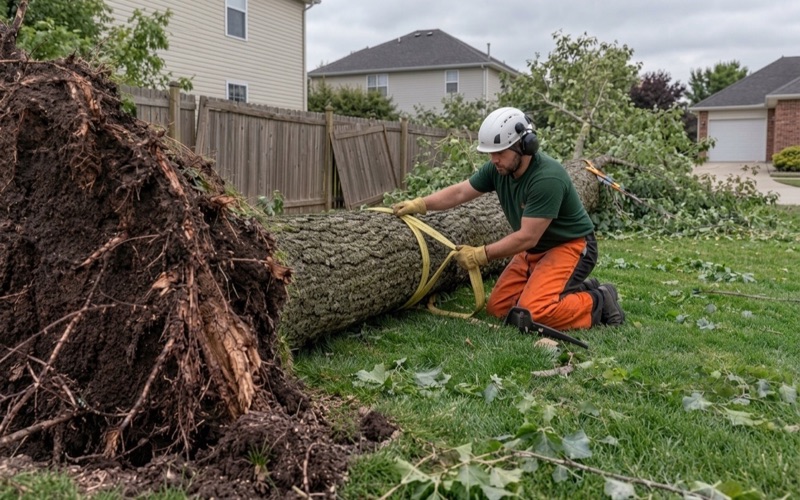
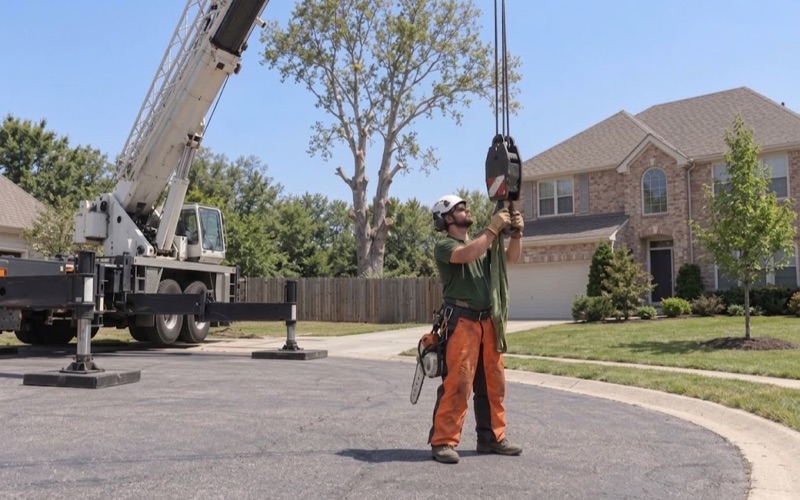
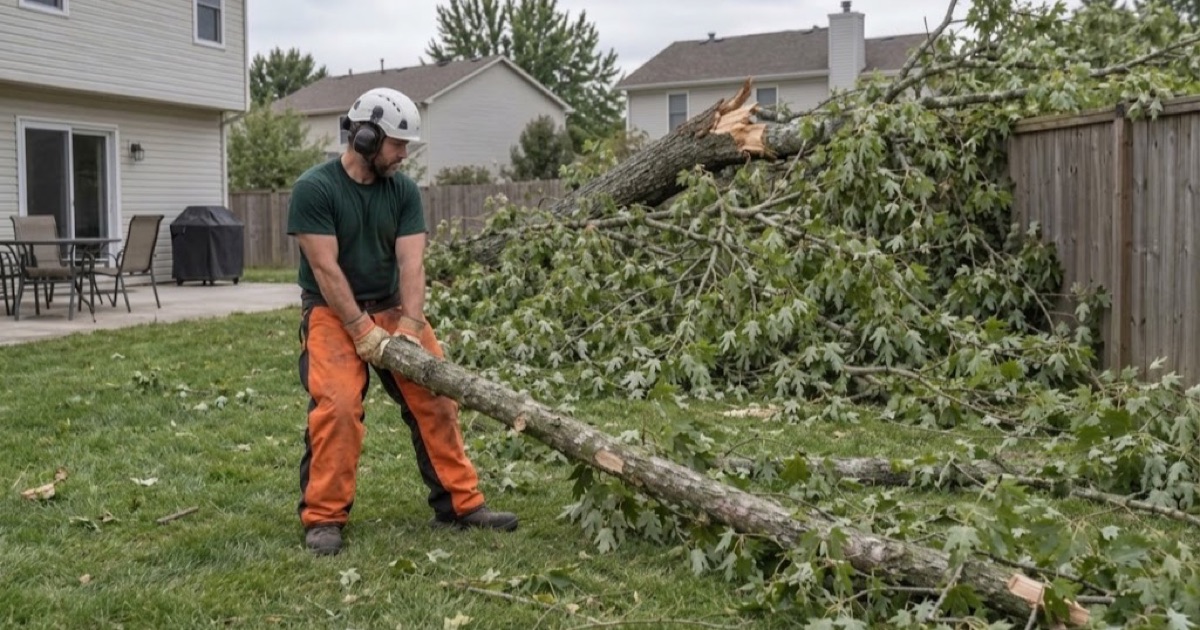
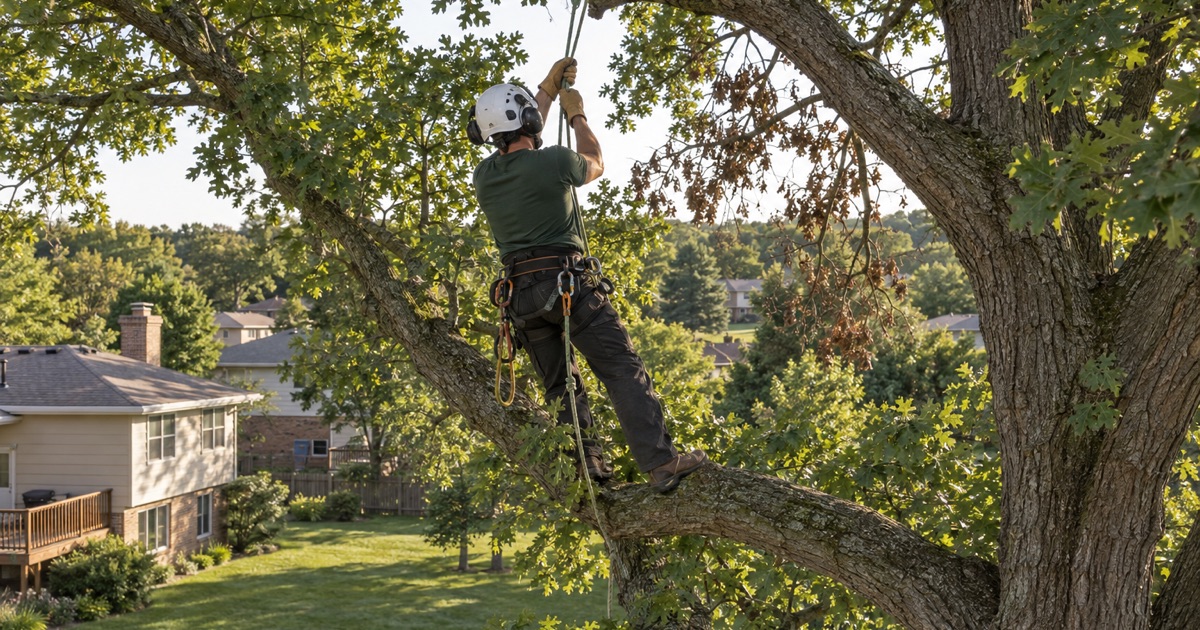
Only 3.58 percent of Lenexa’s housing predates 1960, but the 1970s and the 1980s each account for roughly a fifth of the stock, and those trees went in with the houses. They are first-cycle removals on lots with fences, decks, pools and a neighbor’s roof inside the drop zone, which makes them crane, rigging block and grapple saw work rather than felling.
Johnson County’s Article 21 airport overlay took effect on adoption by Gardner, Olathe, Overland Park and the county - Lenexa is not among them. Where it does apply, no permit is required for a tree under seventy-five feet of vertical height in the horizontal and conical zones, so it bites on already-nonconforming trees, approach zones and terrain-elevated lots rather than an ordinary back-yard oak.
Working Inside a Stream Buffer Without Breaking the Code
Buffers and floodplain lines are set jurisdiction by jurisdiction rather than statewide, and the numbers are real where they exist: across the state line Cass County regulates any modification within seventy-five feet of a stream, and De Soto requires a floodplain development permit against its adopted rate map. Before clearing anything near water we check the parcel against the map that actually governs it.
Kansas Licenses Nobody to Cut Trees, So Check These Instead
Johnson County issues eleven contractor classes and every one of them covers the construction, alteration, repair or demolition of structures; none reaches arboriculture or landscaping. So ask for the certificate of insurance and ask whether a certified arborist is on staff - and know the answer changes at some city limits, because Kansas City, Kansas and Baldwin City both require an arborist license by ordinance.